The Stories That Die Quietly in Indian Cinema


An honest look at the emotional cost Indian writer-directors pay long before their stories ever reach the screen.
This Is Not a Crisis of Talent. It’s a Crisis of Being Seen.
Indian cinema is not short on stories.
That statement may sound counterintuitive in an industry flooded with scripts, pitches, panels, and announcements—but it’s true.
Behind the noise, beneath the churn, there is an abundance of serious, considered, deeply felt work being written every day. Stories shaped slowly. Characters lived patiently. Worlds imagined with care.
And yet, something keeps breaking before it reaches the screen.
Not loudly.
Not spectacularly.
Quietly.
Stories stall.
Conversations fade.
Projects hover in a permanent state of almost.
This is not because filmmakers don’t work hard enough.
It’s not because they don’t understand craft.
And it’s certainly not because they lack passion.
What’s failing is something far more subtle—and far more damaging.
Indian filmmakers are not struggling because they lack stories.
They’re struggling because their stories die before they’re truly seen.
Seen not as loglines.
Not as categories.
Not as market placeholders.
But seen as intent.
As voice.
As something coherent enough to stand on its own—without apology, without distortion, without being prematurely flattened by the system meant to receive it.
Most conversations about the industry stop at outcomes: hits, flops, access, nepotism, luck. But very little attention is paid to what happens before any of that—inside pitch rooms, development meetings, and informal conversations where decisions quietly take shape.

That is where many filmmakers begin to disappear.
Not all at once.
Not dramatically.
But piece by piece—through frustration that turns inward, confidence that slowly contracts, compromises that feel small until they aren’t, and fatigue that dulls even the sharpest conviction.
What follows is not an analysis of the market.
It’s not advice.
And it’s not a manifesto.
It’s a mirror.
An honest breakdown of the emotional reality experienced by aspiring and established Indian writer-directors navigating an industry that listens quickly, judges structurally, and often moves on before truly understanding what’s in front of it.
If you’ve ever felt unseen rather than rejected, misread rather than challenged, or slowly disconnected from the very reason you started telling stories—
This is where we begin.
When You Know the Story Works — But the World Never Gets to It
There is a particular kind of frustration that doesn’t announce itself loudly.
It doesn’t explode in anger or outrage.
It settles quietly, like dust, after yet another meeting that ended with a smile and no follow-up.
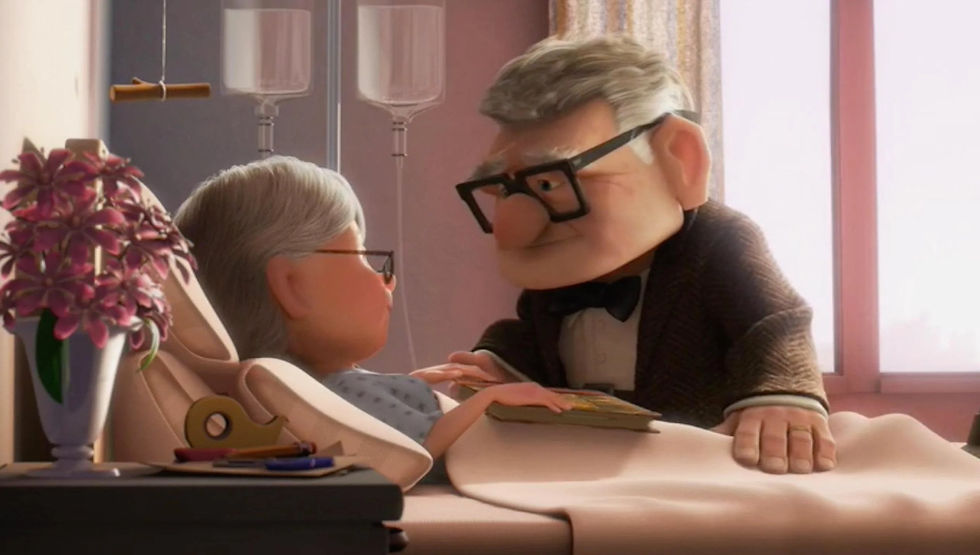
You know this feeling.
You’ve lived with this story long enough to recognize its pulse.
You’ve walked with the characters in silence.
You’ve reworked scenes not because someone asked you to, but because you felt where they rang false.
Somewhere along the way, the story stopped feeling like an idea and started feeling like something that exists.
And yet—when it finally leaves your hands, it doesn’t land.
Not with a thud.Not with resistance.With something worse: polite indifference.
“It’s interesting.”“Let’s reconnect.”“We’ll come back to this.”
The script is skimmed.
Sometimes not even that.
A few pages glanced at. A logline repeated back to you, flattened, unrecognizable.
Weeks pass.
Then months.
No rejection arrives—because rejection would at least confirm that the story was seen.
What arrives instead is silence.
This is where frustration begins to blur into self-doubt. Not the dramatic kind. The quieter, more corrosive kind.
You start replaying the same questions, late at night, without meaning to:
Is it really as strong as I think it is?
Am I missing something obvious?
Or am I simply invisible in a system that doesn’t know how to look?
What hurts most is not that the industry says no.
It’s that the industry never quite gets to the heart of what you’re offering.
The feedback—when it comes—feels strangely misaligned.Comments about tone that miss the point.Suggestions that address a version of the story you never intended to tell.
You listen. You nod. You try to translate.
But inside, a quieter thought forms, one you rarely say out loud:
“They’re not reacting to my story.
They’re reacting to what they think it is.”
And that thought is dangerous—because it sits right at the intersection of frustration and doubt.
On one side is the conviction you’ve earned through the work itself.
On the other, is the creeping fear that conviction may not matter if the system can’t—or won’t—see it.
This is not rejection.
Rejection has clarity.
This is something closer to premature death.
A story that never gets the chance to fail honestly.
A story that fades before it’s fully heard.
And slowly, without any dramatic breaking point, the question shifts.
Not “Is this story good enough?”
But something far more unsettling:
“What if the industry simply can’t see what I see?”
That question doesn’t make you angry.
It makes you tired.
And it lingers—quietly—waiting for the next pitch, the next meeting, the next hopeful beginning.
How Pitch Rooms Slowly Shrink You
No one walks into a pitch room feeling small.
You arrive prepared.
You tell yourself—just be clear, just be honest.
And in the beginning, you are.

But something subtle happens when clarity doesn’t lead to movement.
After the first few meetings that go nowhere, you start adjusting—not the story, but yourself.
Your voice lowers a fraction.
You preface sentences with disclaimers.
“This is just a draft.”
“We’re still figuring it out.”
“Of course, everything is flexible.”
You lean forward, as if proximity might substitute for conviction.
You explain more than necessary.
You rush to soften edges before anyone asks you to.
None of this is conscious.
It’s adaptive.
Each pitch room teaches you—quietly—what kind of presence seems to survive.
Not authority.
Agreeableness.
And slowly, confidence doesn’t disappear.
It contracts.
You stop stating what the story is.
You start asking if it could be something else.
“Would this work better if…?”
“We could also think about…”
“I’m open to changing…”
These are not the words of an unprepared filmmaker.
They are the words of someone who has learned—through repetition—that certainty feels risky.
Shame enters not as humiliation, but as self-surveillance.
You become acutely aware of how you’re coming across.
Whether you sound naive.
Whether you’re overreaching.
Whether you’re allowed to speak with confidence in a room that hasn’t yet validated you.
And the unspoken fear begins to form:
“I don’t sound like someone with authority.”
Not because you lack authority—but because authority, in these rooms, seems to arrive before the story.
It arrives with backing.
With association.
With names that carry weight without explanation.
Without those signals, you compensate with politeness.
With flexibility.With restraint.
You watch others pitch with a casual confidence you recognize immediately—not because they’re better prepared, but because they’re protected.
They don’t apologize for their vision.
They assume it.
And the contrast is brutal.
What’s most damaging is that this erosion doesn’t stay in the room.It follows you home.
You rehearse less boldly.
You second-guess language that once felt precise.
You trim your own conviction before anyone else can.
Over time, the question stops being “How do I communicate this story?”
It becomes:
“How do I avoid sounding like I don’t belong here?”
That question reshapes posture.
It reshapes tone.
It reshapes belief.
And the most painful part?
From the outside, it still looks like professionalism.
But inside, something has narrowed.
Not your talent.
Your permission to stand fully inside your own story.
That’s how pitch rooms don’t just evaluate ideas.
They quietly teach you to take up less space.
Walking In Without a Producer — and Feeling It Immediately
You feel it before anyone says a word.
It’s in the way the meeting starts.
In the quick glance around the table.
“Who’s producing this?”
Not why this story.
Not what it’s saying.
Not even how it unfolds.
Just—who’s backing you?

In Indian pitch culture, this question isn’t administrative.
It’s diagnostic.
Because in that moment, an invisible hierarchy asserts itself.
When a producer’s name is attached, the room leans in.
Time stretches.
Curiosity deepens.
When there isn’t one, something shifts.
The room becomes cautious.
The questions become narrower.
The attention thins.
You haven’t said a word yet, and already the story is carrying the weight of your position in the ecosystem.
This is the exposure no one warns you about.
You’re not just pitching a film.
You’re pitching your right to be taken seriously.
Without a producer, you feel the need to compensate.
You explain more.
You justify decisions that should be self-evident.
You clarify intent before anyone misunderstands—because misunderstanding feels inevitable.
“We’re in early conversations.”“We’re still exploring partners.”“The producer will come on once things align.”
Each sentence is a quiet attempt to bridge a gap that shouldn’t exist—but does.
What’s unfair is not that producers matter.
They do.
What’s unfair is how their absence can eclipse everything else.
A strong vision becomes provisional.
A clear tone becomes hypothetical.
A finished script is treated like a promise instead of a fact.
You start noticing the contrast.
How questions are framed for others.
How patience expands when there’s a name on the project.
How doubt dissolves when someone else has already said yes.
And the unspoken fear settles in:
“I’m being judged before my story is.”
Judged for your network.
For your proximity to power.
For your place in the industry map, you didn’t draw.
You realize that vision alone doesn’t buy you time in the room.
Backing does.
So you begin pitching two things at once.
The story you believe in.
And the credibility you don’t yet have.
That double burden changes everything.
It changes the way you frame ambition.
It changes how boldly you claim tone.
It changes how much certainty you allow yourself to express.
Not because your vision weakens.
But because the room has already decided how cautiously to listen.
This is the structural disadvantage no one talks about.
Not rejection.
Not failure.
Just a constant, quiet uphill climb—where absence speaks louder than intention, and where you’re always trying to get the room to look past who you arelong enough to finally hear what you’re saying.
The Fear of Being Mistaken for the Noise
There is a particular anxiety that comes from working in an industry that never stops talking.
Scripts circulate endlessly.
Loglines blur together.
Everyone is “developing something.”
Everyone is “close.”
From the outside, it looks like abundance.
From the inside, it feels like static.
And somewhere in that noise, you begin to worry about something far more unsettling than rejection.
What if I’m being heard—but not distinguished?
This is not the fear of mediocrity.
You’ve crossed that bridge already.
You’ve done the work.
You know your craft.
You’ve stayed longer with your story than most people ever do.
But the industry doesn’t sort by depth.
It sorts by signal.
And when too many voices compete for attention, the danger isn’t that your work is bad.
It’s that it becomes interchangeable.

You start noticing how quickly conversations compress you.
“We’re seeing a lot of scripts like this.”
“This space is very crowded right now.”
“Everyone’s pitching something similar.”
Similar to what?Similar in theme? In tone? In intention?
No one specifies.
They don’t need to.
The label does the work.
And suddenly, you feel yourself slipping categories—from filmmaker with a voice to another hopeful in the pile.
This is where identity anxiety takes root.
You begin to fear not that your story will fail—but that it will be misunderstood at scale.
That it will be read quickly.Grouped loosely.Filed mentally under “we’ve seen this before”—even when you know, in your bones, that they haven’t.
You watch desperation change the room.
People are pitching louder.
Overselling stakes.
Name-dropping influences instead of articulating intent.
You refuse to do that—but you pay a price for your restraint.
Because restraint, in a noisy system, can look like uncertainty.
And the unspoken fear emerges, quietly but persistently:
“I’ll never cross the line from hopeful to credible.”
Not because you lack credibility.
But because credibility, here, often precedes proof.
It arrives through association.
Through repetition.
Through having already been chosen somewhere else.
Without that, you’re left trying to communicate something delicate in a system that listens bluntly.
You start questioning how much of yourself to show.
Do you sharpen the edges to stand out?
Or soften them to avoid being dismissed as difficult?
Do you speak with conviction and risk being labeled naive?
Or hedge your language and risk blending into the background?
Neither choice feels honest.
Both feel strategic.
And slowly, the anxiety deepens—not about your work, but about your place.
Am I inside the circle yet?
Or still outside, knocking politely, hoping someone notices the difference?
This is the quiet cost of misclassification.
Being treated as part of the noise when you know you’re not.
Having to protect your identity in a system that flattens nuance.
Carrying the weight of distinction without the markers that make distinction legible.
It’s exhausting.

Not because you doubt your voice.But because you’re constantly afraid it’s being heard as something it isn’t.
When Staying Honest Starts to Feel Like a Career Risk
At some point, the pressure shifts.
It stops being about whether the story worksand starts being about whether you will.
Not in craft.
In survival.
The suggestions begin innocently enough.
“This would really open up with a bigger face.”
“Have you thought about attaching someone?”
“Maybe we package it first, then talk story.”
No one says it as a demand.
That’s what makes it difficult to refuse.
You’re not being asked to betray the story.
Just to help it along.
Just to make it easier to say yes.
And so begins the moral negotiation that never quite announces itself.
You start entertaining conversations you know are premature.
Star names floated not because they fit—but because they signal seriousness.
Attachments are discussed not as creative alignment, but as social proof.
You tell yourself it’s temporary.
A means to an end.
“Once we get momentum, we can bring it back to what it’s really about.”
But momentum, once it starts moving in the wrong direction, rarely waits.
Performative packaging creeps in quietly.
Mood boards are designed to impress rather than express.
Comparisons chosen for market comfort, not narrative truth.
Language shaped to sound “current,” even when it doesn’t feel like you.
You begin selling the version of the story that feels safest to others,
not the one that feels most honest to you.
And this is where the tension becomes unbearable.
Because every compromise feels small in isolation.
But together, they form a pattern you recognize—and don’t like.
You’re not being dishonest.
You’re being strategic.
And yet, something inside resists.
The unspoken fear presses harder with every meeting:
“If I don’t play the game, I’ll be ignored.”
Ignored feels worse than diluted.
Invisible feels worse than compromised.
So you keep negotiating.
With the room.
With the process.
With yourself.

You watch others move ahead—projects announced, deals rumored—and you wonder what price was paid behind closed doors.
You ask yourself questions that have no clean answers:
How much flexibility is professionalism—and how much is surrender?
At what point does adaptation become erasure?
Is integrity a luxury in an industry built on leverage?
There’s no villain here.
No clear right choice.
Only the weight of knowing that every yes pulls you slightly away from the story you set out to tell—and every no risks freezing you in place.
This is not about purity. It’s about preservation.
Preserving the story.
Preserving your voice.
Preserving the belief that the work matters beyond its ability to be packaged.
And yet, in a system that rewards compliance faster than conviction, that belief starts to feel fragile.
You don’t feel angry.
You feel tired.
Tired of having to prove seriousness through signals that don’t belong to the story.
Tired of pretending these compromises are neutral.
Tired of carrying a question no one can answer for you:
How much of myself can I afford to keep—and still be allowed to move forward?
That question doesn’t resolve neatly.
It lingers.
Heavy.
Uncomfortable.
Waiting for the next meeting, the next suggestion, the next small decision that asks you—once again—to choose between staying honest and staying visible.
The Endless Loop of “Almost”
There is a moment when effort stops feeling purposeful.
Not because you’ve given up—but because the motion no longer leads anywhere.
You’ve had the meetings.
More than you can count.
They begin the same way every time: curiosity, enthusiasm, possibility.
“We like this.”
“This has potential.”
“Let’s keep the conversation going.”

You leave the room cautiously hopeful.
Not euphoric. Not naive.Just enough hope to keep moving.
Then the days stretch.
Follow-ups are acknowledged, not answered.
Messages are read, not acted on.
Dates are suggested, postponed, forgotten.
“We’re just aligning internally.”
“Let’s circle back after the festival.”
“This isn’t a no—just not now.”
And so you wait.
You tell yourself this is normal.
That momentum takes time.
That patience is part of the process.
But repetition changes the meaning.
After the tenth “almost,” anticipation becomes vigilance.
After the twentieth, it becomes routine.
You stop checking your phone with excitement.
You check it with resignation.
The fatigue doesn’t arrive as burnout.
It arrives as dullness.
You prepare decks mechanically.
You rehearse pitches without conviction.
You say the right things because you’ve said them before.
What once felt like a possibility now feels like maintenance.
And beneath it all, the unspoken fear takes shape:
“I’m stuck here forever.”
Not failing.
Not succeeding.
Just orbiting.
Orbiting interest without gravity.
Orbiting conversations that never land.
Orbiting an industry that keeps you close enough to hope—but never close enough to commit.
This is where impatience sharpens—not into anger, but into restlessness.
You start wondering how long a career can survive in the in-between.
How many years can be spent developing instead of making?
How many times can you revise the same pitch without changing its fate?
How long can you explain the same story to different faces and pretend it’s new?
The most dangerous part is not the waiting.
It’s the numbness that follows.
You stop feeling disappointment because disappointment requires expectation.
You stop feeling urgency because urgency has nowhere to go.
You tell yourself you’re being realistic.
You call it maturity.
But somewhere inside, a quieter truth settles in:
You’re tired.
Tired of polite interest.
Tired of non-answers.
Tired of investing energy into conversations that never demand anything back.
This is not despair.
Despair would at least be decisive.
This is stagnation—the slow draining of emotional color from something you once cared about deeply.
And in that gray space, a dangerous question whispers, over and over:
What if this is as far as it goes?
Not today.
Not this year.
Forever.
When You Stop Feeling Like a Filmmaker
There is a moment no one prepares you for.
It doesn’t arrive with drama.
There’s no breaking point.
No public failure.
It arrives quietly—when you realize you’ve stopped introducing yourself with certainty.
You still say the words.
Writer.
Director.

But they land differently now.
As descriptions. Not convictions.
Somewhere along the way, the work began to feel conditional.
You don’t ask, “What do I want to make?”
You ask, “What will be allowed?”
You don’t start with truth.
You start with permission.
And that shift—subtle as it is—changes everything.
You begin measuring yourself against reactions instead of instincts.
Against meetings instead of moments.
Against responses instead of resonance.
The joy that once lived inside the process—the private certainty, the quiet pride—starts thinning out.
You still work.
You still write.
You still show up.
But something essential has stepped back.
You notice it in small ways.
How you hesitate before committing to a choice that once felt obvious.
How you rewrite not to deepen the story—but to preempt objection.
How you talk about your work as if it belongs to a future version of you.
“Once it gets made…”“If this moves forward…”
The present tense disappears.
And with it, a piece of yourself.
The unspoken fear surfaces slowly, painfully:
“I’m losing myself chasing permission.”
Not from one person.Not from one studio.From the system.
From rooms that ask you to justify your voice before hearing it.
From processes that reward compliance faster than courage.
From cycles that train you to wait instead of standing.
You realize you’ve been shrinking—not in talent, but in posture.
You’ve become careful with your passion.
Strategic with your conviction.Guarded with your imagination.
Not because you stopped believing—but because belief without reinforcement is heavy to carry alone.
This is the quiet loss of dignity.
Not humiliation.
Not defeat.
Just the erosion that comes from repeatedly placing your identity in other people’s hands—and waiting for it to be handed back.
You remember a time when the work felt inevitable.
When you didn’t need validation to feel real.
When making the story was enough—even if no one else saw it yet.
And now, that memory feels distant.
Not gone.
Just… far away.
This is not about ambition.
It’s not even about success.
It’s about the cost of staying too long in a system that asks you to earn the right to feel like yourself.
And the question that lingers—quiet, heavy, unresolved—is no longer about the industry.
It’s about you.
How long can you keep asking for permission—before you forget what it felt like to choose?
That question doesn’t demand an answer.
It waits.
Patiently.
For the moment, you decide whether the story you need to protect next is the one on the page—or the one you’ve been slowly losing inside yourself.
What Gets Lost When We Ask for Stars Before Stories
Between 2017 and 2018, I tried—earnestly—to enter the Indian film industry not as a commentator, but as a filmmaker.
Under the banner of iJOT Productions, I wrote three speculative feature scripts. Not pitches. Not outlines. Full screenplays—written with intent, restraint, and a belief that a good story, told well, should at least earn the right to be read.
What followed was instructive.
In meeting after meeting—across corporate studios and independent outfits alike—the first question was rarely about the story.
It wasn’t even, “Do you have a producer attached?”
It was more blunt. More revealing.
“Which megastar is attached to this?”
And when the answer was “none,” the conversation ended before it began.

The scripts were not read.
The characters were not met.
The worlds were not entered.
The story itself never made it into the room.
This wasn’t arrogance.
It was a system operating exactly as designed.
In an ecosystem where risk is managed through celebrity gravity, stories without stars are treated not as creative propositions—but as liabilities. Reading becomes optional. Engagement becomes conditional. Vision becomes secondary to insurance.
And over time, this logic reshapes the emotional landscape you’ve just read about.
Frustration isn’t born from rejection—it’s born from being bypassed.
Self-doubt grows not from criticism, but from silence.
Confidence erodes when authority is outsourced to surnames.
Integrity frays when survival requires packaging before purpose.
Fatigue sets in when “almost” becomes a permanent state.
Dignity slips when permission replaces conviction.
This is not an abstract problem.
It is not theoretical.
It is lived.
When an industry refuses to look until safety is guaranteed by stardom, it quietly teaches its filmmakers a devastating lesson: your story is not enough on its own.
And yet—history tells us otherwise.
The most enduring films in Indian cinema did not begin as star vehicles. They became star-defining because the stories were strong enough to carry weight before names amplified them. Somewhere along the way, we reversed that order—and in doing so, we narrowed what is allowed to exist.
The crisis facing Indian cinema today is not a lack of imagination.It is a failure of early vision.
A failure to create systems that can see a story before it is shielded by fame.A failure to distinguish between risk and uncertainty.A failure to protect narrative integrity before market logic takes over.
If Indian cinema is to evolve—not just technologically, but culturally—it must relearn how to listen. Not to noise. Not to hype. But to intent.
Until then, many of our most meaningful stories will continue to die quietly—not because they weren’t worthy, but because no one was willing to see them without a star standing in front.
And perhaps the most urgent question we should be asking is not, “Who is attached?”
But something far more uncomfortable.
What are we losing by refusing to look first?


Comments